CyberArk vs SailPoint: What Their 2025 Identity Security Reports Say
CyberArk and SailPoint both put identity at the centre of security in 2025, but one starts from attack exposure and the other from program maturity. Here is where they agree, where they diverge, and which numbers should not be compared directly.

CyberArk and SailPoint both present identity as a central security concern in 2025, but they approach the subject from different directions. CyberArk's 2025 Identity Security Landscape concentrates on identity-centric attacks, privileged access, machine identity sprawl, AI-related risk, and gaps in security controls. SailPoint's The Horizons of Identity Security 2025-2026 focuses more on identity program maturity, governance, deployment, data quality, automation, and the business value of advanced identity capabilities.
Read together, the reports offer complementary views of the same transition. Identity is expanding beyond workforce access management to cover machines, service accounts, AI agents, cloud entitlements, threat detection, and dynamic privilege decisions. Both reports argue that organizations need broader visibility and more automated governance, although CyberArk emphasizes the risks of insufficient control while SailPoint emphasizes the capabilities and operating practices required to mature.
The comparison is useful for CISOs, IAM and IGA leaders, PAM teams, security architects, SOC leaders, risk teams, and anyone evaluating how identity security priorities are changing as non-human identities and AI become more important.
Short answer
CyberArk and SailPoint agree that identity security must now cover human and non-human identities, including machine identities and AI agents. CyberArk places more weight on identity-centric breaches, phishing, privilege, machine identity sprawl, and fragmented controls. SailPoint places more weight on identity maturity, unified identity data, automation, adaptive access, deployment discipline, and quantifying business value. Their data should not always be compared directly because the reports use different survey populations, questions, and supporting sources.
What the reports agree on
Identity is becoming broader than traditional workforce IAM
Both reports describe an identity environment that now includes human users, service accounts, workloads, bots, machine identities, and AI agents.
CyberArk reports that machine identities outnumber human identities by more than 80 to 1 among its surveyed organizations and argues that organizations need to redefine privilege so that machine identities with sensitive access are treated as privileged identities. It also reports that only 12% of respondents include any machine identity with sensitive-data access in their organization-wide definition of a privileged identity.
SailPoint similarly treats non-human identity governance as a core requirement for identity maturity. Its framework adds machine identity management, AI agent lifecycle governance, AI agent authentication, privilege management, session monitoring, and cloud infrastructure entitlement management to the capabilities expected at higher maturity levels.
The common message is that identity programs designed mainly around employees and administrators are no longer broad enough for the environments these reports describe.
AI agents are becoming an identity governance problem
Both reports distinguish between using AI for security and securing AI itself.
CyberArk describes an "AI trifecta": attackers using AI, defenders using AI, and organizations creating additional identity risk as they deploy AI systems. It reports that 72% of employees regularly use AI tools at work, while 68% of respondents lack identity security controls for AI and LLMs. It also identifies AI agents as machine identities that need unique identification, authentication, privilege controls, lifecycle management, and monitoring.
SailPoint reaches a similar conclusion through its maturity model. AI agent IAM is one of the capabilities separating more mature organizations from less mature ones. The report says AI agents are governed in fewer than four in ten organizations today and expects them to grow faster than other identity types over the next three to five years.
Both therefore treat AI agents as identities that require governance, not simply as applications or productivity tools.
Static privilege is giving way to dynamic access
The reports also converge on least privilege, just-in-time access, and reducing standing permissions.
CyberArk recommends privileged access management, least privilege, role-based access controls, just-in-time approaches, dynamic secrets rotation, strong authentication, and broader recognition of machine identities as privileged users.
SailPoint describes privileged access as moving from static to dynamic and data-driven. Its more advanced maturity stages include real-time risk assessment, dynamic access decisions, just-in-time and ephemeral privileges, zero standing privilege concepts, behavioral analytics, and policy adjustments based on context.
The emphasis differs, but the direction is the same: access should increasingly reflect current risk and need rather than remain permanently assigned.
Fragmented identity systems limit visibility and response
CyberArk reports that 70% of respondents identify silos as a root cause of organizational risk, while 68% say lack of integration between identity and security tools hinders attack detection. It also reports that 49% lack full visibility into entitlements and permissions across their entire cloud environment.
SailPoint describes similar fragmentation through the lens of maturity and deployment. It argues for unified identity data, identity fabrics, centralized control planes, cross-environment governance, and integration of identity telemetry into SIEM and SOAR workflows.
Both reports therefore connect identity fragmentation to weaker governance and slower security operations, although CyberArk measures the perceived risk of silos more directly while SailPoint concentrates on the architecture and operating model needed to overcome them.
Identity is moving into detection and response
CyberArk presents AI-assisted analytics, anomaly detection, session monitoring, identity threat prevention, and integration with security operations as ways to make identity security more adaptive.
SailPoint develops this idea further, describing identity as a source of security telemetry. It highlights Identity Threat Detection and Response (ITDR), privileged account monitoring, identity forensics, SIEM/SOAR integration, automated remediation, and real-time identity-driven containment.
This is one of the clearest areas of agreement: identity is no longer presented only as a gate that grants or denies access. Both reports increasingly treat identity signals as inputs to detection and incident response.
Where the reports differ
CyberArk starts with attack exposure; SailPoint starts with program maturity
CyberArk's report is structured around risk and readiness. It opens with identity-centric breach experience, phishing and vishing, AI adoption, machine identity growth, privileged access, and tool fragmentation. Its recommendations focus on securing every identity, extending privilege controls to machines, consolidating tools, improving visibility, and strengthening governance.
SailPoint's report starts from a maturity framework. Organizations are grouped into five "Horizons" according to strategy, technology and tools, operating model, and talent. The report asks what capabilities distinguish more mature identity programs and what prevents organizations from advancing.
This creates a practical difference for readers. CyberArk is stronger for understanding what identity-related exposure looks like from the perspective of security decision-makers. SailPoint is stronger for understanding how an identity program can progress from manual and fragmented controls toward automated, data-driven governance.
CyberArk emphasizes breach and phishing data more heavily
CyberArk reports that nine out of ten organizations experienced a successful identity-centric breach of the type discussed in the report. It also says more than three-quarters experienced successful phishing attacks, including AI-driven deepfake scams, and that more than half of those victims were hit multiple times. Elsewhere, it reports that 87% experienced at least two successful identity-centric breaches in the prior 12 months.
SailPoint does not build its analysis around comparable breach-frequency statistics. Instead, it evaluates identity capabilities, deployment outcomes, maturity progression, and a scenario showing how more advanced identity controls could improve response to stolen credentials.
This means CyberArk provides more direct survey evidence on perceived identity attack exposure, while SailPoint provides more detail on the capabilities associated with stronger identity operations.
SailPoint goes deeper on deployment execution
Deployment is one of the most distinctive areas in SailPoint's report.
Only 14% of organizations in its detailed survey said their most recent IAM deployment was completely successful. The report also says 48% of deployments ran over budget, 60% missed timelines by at least a month, and 32% did not positively improve user experience.
SailPoint then links better outcomes to application inventory, risk-based onboarding, reusable patterns, identity data cleanup, source-of-truth design, cross-functional teams, and horizon-specific implementation practices.
CyberArk discusses consolidation, automation, and modernization, but it does not provide the same level of deployment-process analysis. Teams planning a major IAM or IGA transformation may therefore find SailPoint more prescriptive on implementation mechanics.
SailPoint puts more emphasis on identity data quality
SailPoint repeatedly treats data readiness as a prerequisite for advanced identity capabilities. It highlights identity data normalization, entity resolution, master identity records, real-time synchronization, data ownership, and continuous data-quality monitoring.
The report says 44% of Horizon 4+ organizations still report gaps in identity data quality or normalization and states that organizations prioritizing data cleanup before migration were 1.6 times more likely to report completely successful IAM deployments.
CyberArk's visibility concerns overlap with this issue, but its report is more focused on discovering identities, entitlements, secrets, privileged access, and security-control coverage than on identity data architecture itself.
CyberArk puts more emphasis on privilege and machine identity exposure
Machine identities are important in both reports, but CyberArk makes them a more immediate exposure story.
It reports more than 80 machine identities per human identity, says 42% of machine identities and 68% of bots and machine accounts have access to sensitive data, and identifies machine identities as the top perceived identity risk in terms of unmanaged or unknown identities.
SailPoint treats machine identity management primarily as a maturity requirement and future operating challenge. It expects automated discovery, lifecycle management, relationship mapping, and risk-based governance to become progressively more important as organizations advance.
CyberArk's framing is therefore more about how machine identity sprawl creates privilege risk now; SailPoint's is more about what governance capabilities will be required as that population grows.
SailPoint makes a stronger business-value case
SailPoint devotes an entire chapter to quantifying identity ROI. It reports that IAM is perceived as the highest-ROI security domain by more organizations than the average across other security domains, while only 25% position IAM as a strategic business enabler.
It argues that identity leaders should quantify not only risk reduction and compliance but also cost savings, productivity, margin impact, and revenue enablement. It also links advanced identity capabilities to reported productivity improvements, cost savings, risk reduction, and fewer audit findings.
CyberArk does connect identity security to resilience, operational efficiency, compliance, and cyber insurance requirements, but its primary argument remains risk-based rather than financial.
For identity leaders building an investment case with CFOs, COOs, or other business executives, SailPoint provides more explicit material.
Contrasting data: what can and cannot be compared directly
The two reports contain several statistics that appear comparable at first glance but come from different research designs.
CyberArk's primary survey was conducted between January and February 2025 among 2,600 cybersecurity decision-makers across 20 countries. SailPoint's 2025 research surveyed 375 IAM decision-makers across North America, Europe, Asia, and Latin America, with many detailed findings based on a subset of 229 respondents.
That difference matters when reading the numbers.
For example, CyberArk reports a machine-to-human identity ratio above 80:1 from its own survey. SailPoint later cites a 45:1 ratio for non-human to human identities, but that figure is attributed in the report's sources to a 2025 Gartner Security & Risk Management Summit session rather than to SailPoint's own survey. The two ratios should therefore not be interpreted as conflicting measurements from equivalent samples.
Similarly, CyberArk's breach and phishing statistics measure reported attack experience, while SailPoint's strongest percentages often measure maturity level, capability adoption, deployment success, or reported business outcomes. They answer different questions.
The safest comparison is directional: both reports see rapid growth in non-human identities and inadequate governance as material issues, even though they quantify them differently.
Key Cyntari themes related to this topic
Identity, Phishing & Access Security
This is the primary theme for both reports because they focus on IAM, IGA, privileged access, phishing and credential risk, entitlement visibility, and identity governance.
AI Security & AI Governance
Both reports discuss AI agents as identities that require authentication, lifecycle governance, privilege management, monitoring, and policy controls.
SOC, Detection & Response
Both connect identity telemetry and behavior to threat detection and response, with SailPoint placing particular emphasis on ITDR, SIEM/SOAR integration, and automated remediation.
Cloud Security
The reports address cloud identities, entitlements, cloud workloads, multi-cloud governance, service accounts, and the difficulty of maintaining consistent identity controls across distributed environments.
Cyber Risk & Resilience
CyberArk explicitly links identity security to business resilience and recovery, while SailPoint associates mature identity capabilities with risk reduction, faster containment, and operational continuity.
Governance, Regulation & Compliance
Both reports address governance and auditability. CyberArk also references regulatory pressure and cyber insurance requirements, while SailPoint gives substantial attention to compliance enablement and audit outcomes.
Data Security & Privacy
The reports connect identity controls to sensitive-data access. SailPoint goes further into cloud data governance, data classification, and context-aware access.
What this means for security teams
The combined message is not simply to buy more identity tools. Both reports point toward a broader operating model in which identity governance spans people, machines, workloads, service accounts, and AI agents.
For teams at an earlier stage, the common priorities are visibility, inventory, clean identity data, lifecycle processes, application onboarding, least privilege, and clearer ownership. SailPoint provides more detail on sequencing these foundations, while CyberArk underscores the exposure created when they are missing.
For more mature teams, the reports point toward dynamic privilege, just-in-time access, AI agent governance, automated machine identity lifecycle management, integrated identity telemetry, and stronger links between IAM and security operations.
The reports also suggest that consolidation should not be understood only as reducing tool count. The more important outcome is consistent policy, shared identity data, complete entitlement visibility, and security signals that can move across IAM, IGA, PAM, cloud, and SOC processes.
Finally, identity leaders may need to communicate value differently depending on the audience. CyberArk gives them a risk-centered case built around breach exposure, privilege, and resilience. SailPoint adds a transformation and economics case built around deployment success, productivity, cost, compliance, and measurable business value.
Recommended reports to read
CyberArk — 2025 Identity Security Landscape — 2025
Read the CyberArk report if the main question is how identity-related risk is changing in practice. It is particularly useful for data on identity-centric breaches, phishing, AI use, machine identity proliferation, privileged access, identity silos, and security-control coverage.
It is also useful for PAM teams and security leaders evaluating how definitions of privileged identity need to expand beyond human administrators.
SailPoint — Horizons of Identity Security — 2025-2026
Read the SailPoint report if the main question is how to build and mature an identity security program. It provides a structured maturity model, detailed deployment guidance, identity data practices, automation priorities, AI agent governance requirements, and approaches to demonstrating ROI.
It is particularly useful for IAM and IGA leaders planning modernization programs or trying to connect identity investment to wider business outcomes.
Read both when evaluating an identity security strategy
The reports are most complementary when used together. CyberArk describes the exposure and control gaps that make identity security urgent; SailPoint describes the program capabilities, implementation practices, and maturity steps that can address many of those gaps.
Reports mentioned in this article
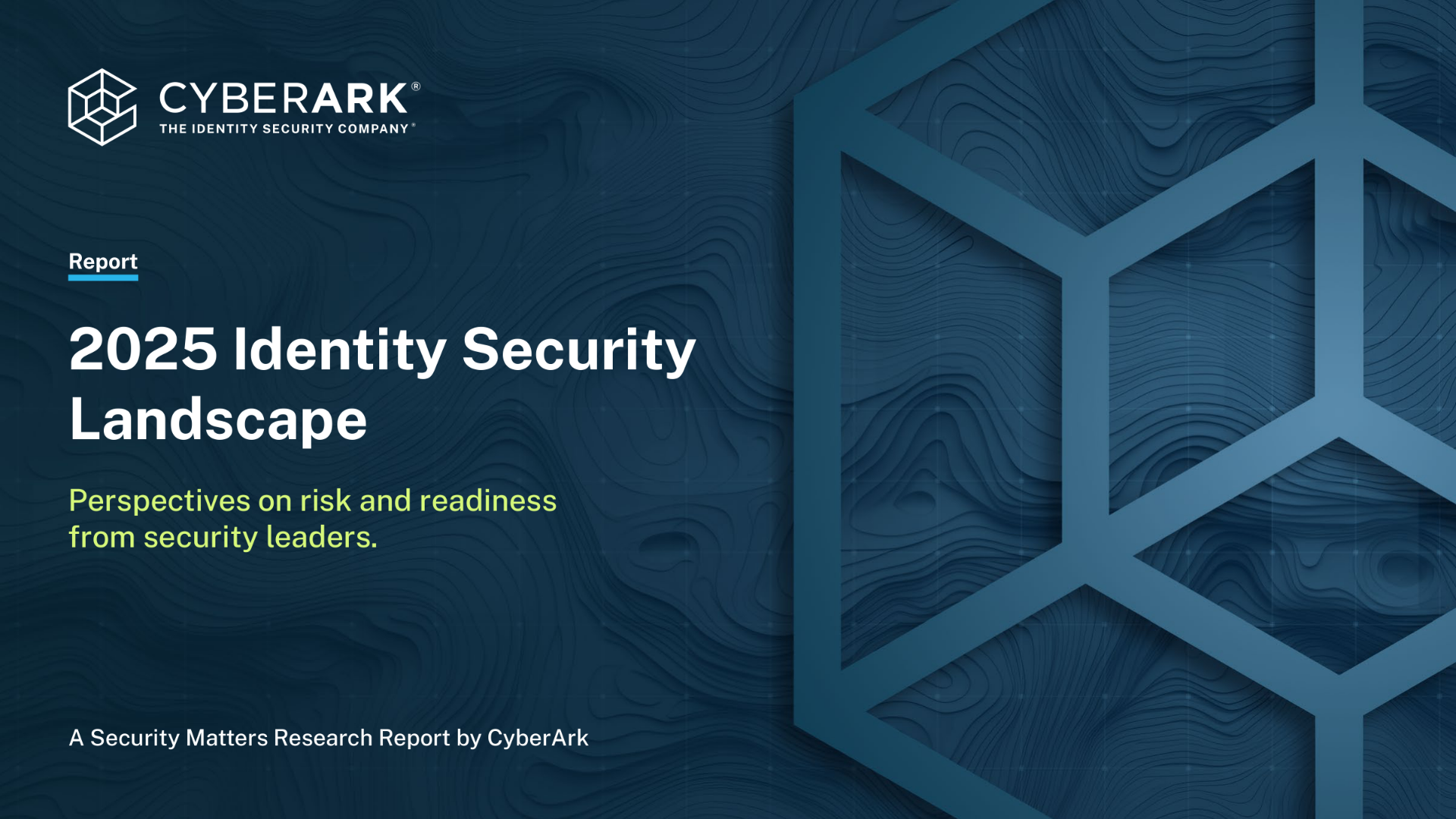
CyberArk — 2025 Identity Security Landscape
CyberArk's 2025 Identity Security Landscape (a Security Matters research report) maps how AI adoption and the explosion of machine identities are reshaping identity risk. Nine in ten organizations reported a successful identity-centric breach, over half (51%) fell victim to phishing/vishing multiple times, and machine identities now outnumber human identities by more than 80 to 1 — yet only 12% treat machine identities as privileged. 72% of employees use AI tools at work while 68% of organizations still lack identity security controls for them, fuelling shadow-AI risk. The report frames AI as a "triple threat" (weapon, defender, and system to secure), warns that traditional IAM cannot govern autonomous AI agents, and recommends privileged access management, least privilege, session monitoring, tool consolidation, and governance aligned with tightening regulation (e.g., Australia's Cyber Security Act 2024).
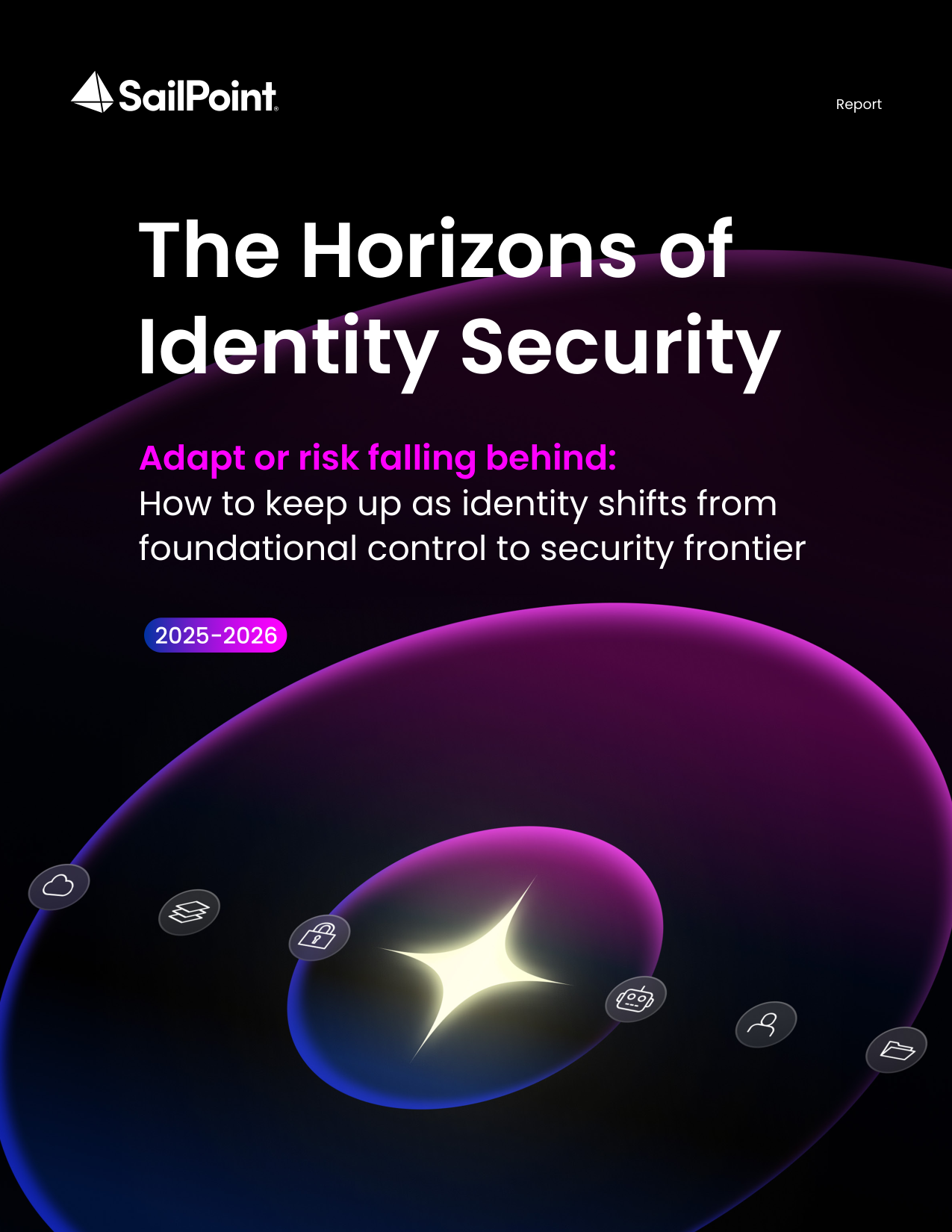
SailPoint — Horizons of Identity Security
This report explores the evolving landscape of identity security, focusing on the five maturity horizons organizations face. It highlights the shift from foundational control to a dynamic security frontier, emphasizing the role of AI, automation, and data governance. The report identifies challenges, opportunities, and key capabilities for advancing identity security maturity across industries.